
How to prepare parcels for courier: UK step-by-step guide
Updated: May 15
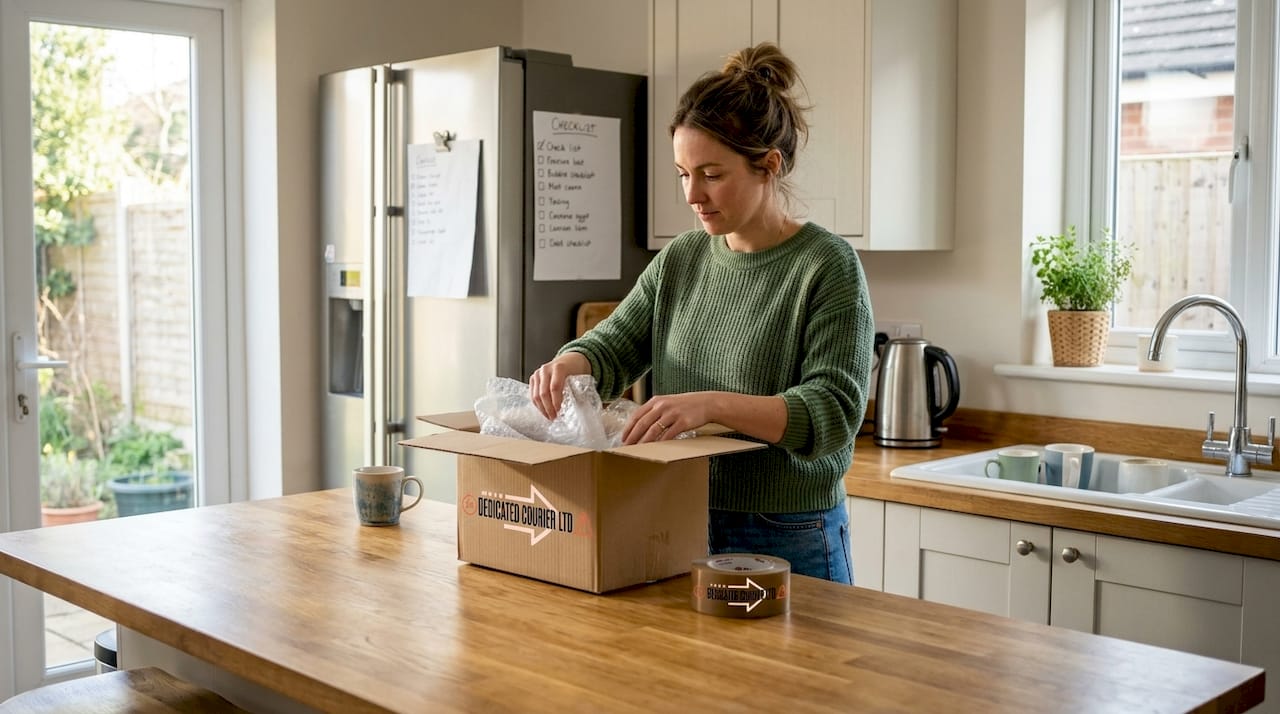
A parcel arrives at your client’s office crushed, the contents damaged, and the delivery two hours late. For a small business or corporate operation relying on urgent courier services, that single incident can cost you a client relationship, a refund, and your reputation. The good news is that most of these situations are entirely preventable. Proper parcel preparation is not complicated, but it does require a clear process. This guide walks you through every stage, from gathering materials to final checks, so your goods in transit arrive safely and on time.
Table of Contents
Key Takeaways
Point | Details |
Prep reduces risk | Careful parcel preparation ensures timely, safe, and undamaged deliveries for UK businesses. |
Checklist is vital | Use a checklist of materials and size/weight limits to avoid last-minute problems with your parcels. |
Right packaging matters | Choose robust, well-padded containers based on the contents and item value for best results. |
Label clearly | Always use readable, accurate labels to speed up handling and collection by your courier. |
Double-check restrictions | Confirm your item is allowed and paperwork is complete to ensure fast collection and delivery. |
Why parcel preparation matters for urgent courier services
When you book an urgent or same-day courier, you are paying for speed and reliability. Poor packaging can undermine both. A box that collapses in transit, or a label that peels off mid-journey, creates delays that no courier network can fully absorb. The knock-on effect hits your client satisfaction scores and, ultimately, your profits.
Proper preparation cuts down courier delivery issues, and businesses that invest time in packaging consistently report fewer claims and smoother collections. In fact, good preparation can reduce average delivery delays by up to 30%. That figure matters when you are operating on tight deadlines.
For B2B clients especially, the condition of a parcel on arrival reflects directly on your professionalism. A well-packaged consignment signals that you take your supply chain seriously. The benefits of optimising parcel delivery extend beyond avoiding damages; they build trust with every recipient.
Key risks of poor parcel preparation include:
Damaged goods leading to replacement costs and client disputes
Delayed collections because parcels are not ready or correctly labelled
Rejected shipments due to restricted items or missing documentation
Voided insurance if packaging does not meet minimum standards
Now that we have set the context around the risks of poor parcel preparation, let us detail what you will need before packing your first parcel.
What you need before you start packing parcels
Having the right materials to hand before you begin saves time and prevents last-minute compromises. A rushed packing job with inadequate materials is one of the most common causes of transit damage. The courier essentials checklist for UK SMEs confirms that preparation starts well before the tape gun comes out.
Here is a summary of core materials and their recommended uses:
Material | Purpose | Recommended standard |
Double-walled cardboard box | Primary container for most parcels | Minimum 3-ply for items over 5kg |
Bubble wrap | Internal cushioning for fragile items | Minimum 5cm layer around contents |
Packing tape | Sealing all box seams | 50mm wide, heavy-duty |
Poly mailers | Lightweight, non-fragile items | Tamper-evident seal preferred |
Printed shipping labels | Identification and routing | Minimum font size 12pt, waterproof |
Packing peanuts or foam | Void fill to prevent movement | Fill all gaps completely |
Before you pack anything, you should also have the parcel dimensions and weight ready. Couriers use these figures to confirm vehicle suitability and pricing. Inaccurate measurements can result in surcharges or, in some cases, a refused collection.
Always review the list of acceptable courier items before booking. Certain goods, including lithium batteries, aerosols, and perishables, are subject to restrictions or require special handling declarations.
Pro Tip: Keep a dedicated packing station stocked with all essential materials. When an urgent order comes in, you will not waste time searching for tape or labels. Speed at the packing stage directly supports faster collection times.
Having your materials and knowledge in place, you can now follow a systematic process to pack for safety and efficiency.
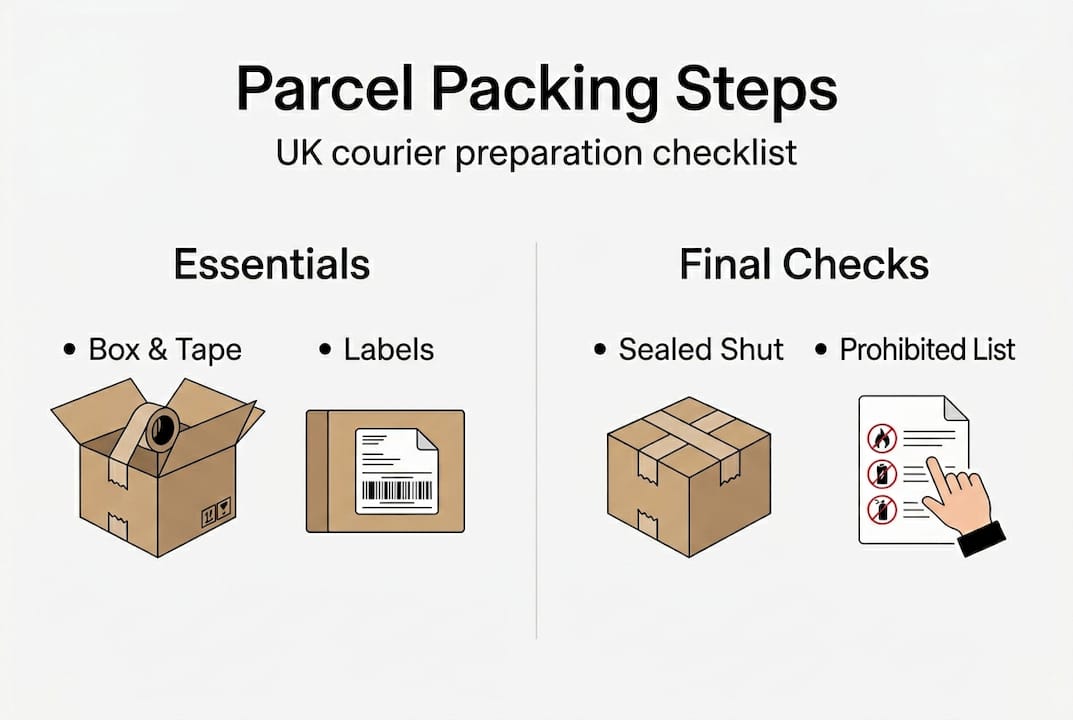
Step-by-step guide to efficient parcel preparation
Following a consistent sequence each time you pack a parcel removes guesswork and reduces errors. The same day courier process depends on parcels being ready for immediate collection, so your packing routine needs to be both thorough and quick.
Select the right container. Choose a box or mailer that fits your item with 5 to 7cm of space on all sides for padding. Avoid reusing heavily worn boxes; structural integrity matters.
Wrap the contents. Use bubble wrap or foam to cover all surfaces of fragile or sensitive items. Secure the wrapping with tape so it does not shift during transit.
Fill all voids. Empty space inside a box allows contents to move and collide. Use packing peanuts, crumpled paper, or foam inserts to eliminate all gaps.
Place contents centrally. Position the item in the middle of the box, away from all walls. This distributes impact forces evenly if the parcel is dropped.
Seal all seams. Apply heavy-duty packing tape along every seam, including the top, bottom, and all four edges. The H-tape method (three strips across the top and bottom) is the industry standard.
Attach the shipping label clearly. Print labels at a legible size and attach them to the largest flat surface. Cover with clear tape to protect against moisture. Remove or obscure any old labels from reused boxes.
Mark fragile items. If contents are breakable, mark all sides of the box clearly. This is not a guarantee of careful handling, but it does prompt awareness.
The step-by-step delivery guide for businesses reinforces that each of these steps contributes to a smoother handover at collection. Skipping even one stage increases the risk of a problem further down the chain.
For reference, here is a quick comparison of packaging approaches for different item types:
Item type | Recommended container | Padding required | Special notes |
Documents | Rigid envelope or cardboard sleeve | Minimal | Waterproof outer recommended |
Electronics | Double-walled box | 5cm foam or bubble wrap all sides | Anti-static wrap if applicable |
Glassware | Double-walled box | 7cm+ bubble wrap, individual wrapping | Mark fragile on all sides |
Clothing or soft goods | Poly mailer or box | Minimal | Tamper-evident seal preferred |
Industrial parts | Heavy-duty box or crate | Dense foam or custom inserts | Confirm weight with courier |
Pro Tip: Optimisation tips for urgent shipments suggest pre-printing labels for regular routes and keeping box sizes standardised. This cuts packing time significantly when multiple urgent orders arrive at once.
Once your parcels are securely packed, some further checks can guarantee successful collection and delivery.
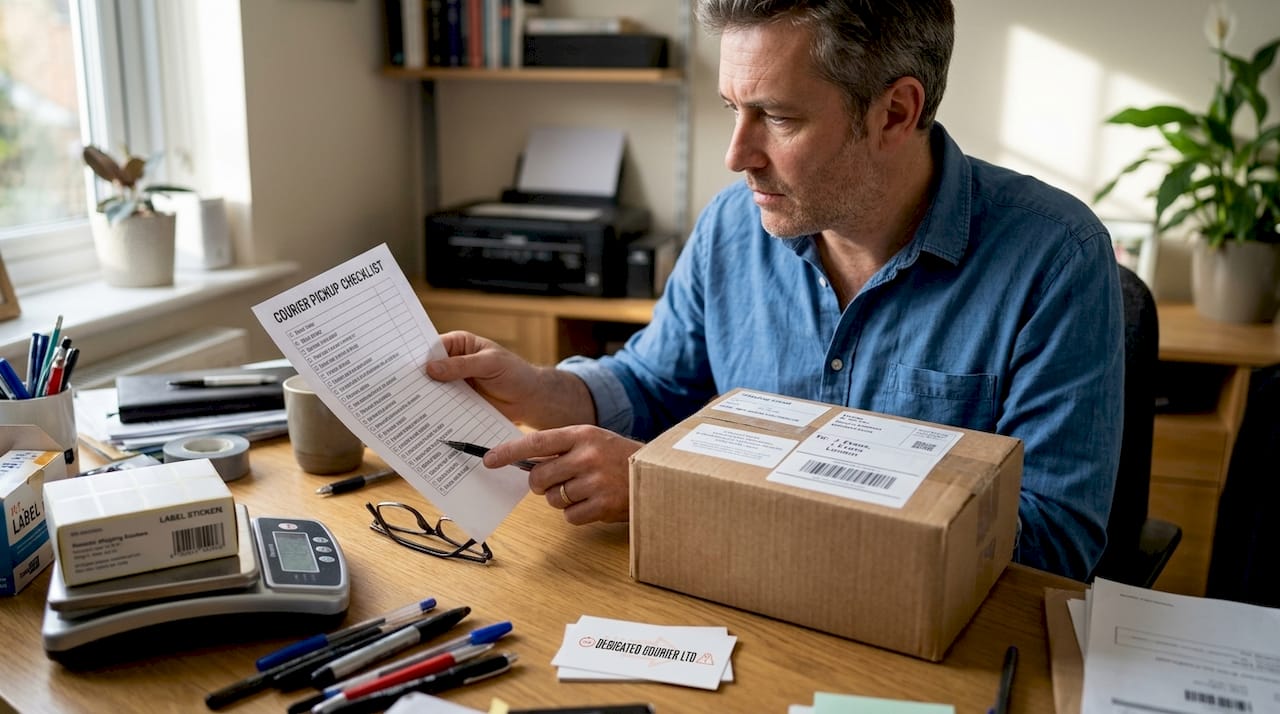
Final checks before calling your courier
Packing the parcel correctly is only part of the process. Before you contact your courier, a short verification routine can prevent collection delays and documentation issues. Verifying parcel details reduces collection delays and keeps your urgent shipment on schedule.
Work through the following before making the call:
Confirm the delivery address matches exactly what you will provide to the courier. A single digit wrong in a postcode can send a driver to the wrong location.
Include a contact number for both sender and recipient on the label. Couriers need to reach someone quickly if access is restricted.
Check item restrictions one final time, particularly for international or cross-border shipments where customs rules apply.
Prepare all paperwork. For commercial shipments, this may include invoices, packing lists, or customs declarations. Have these printed and attached or ready to hand over.
Review insurance options. Standard courier coverage may not fully protect high-value goods in transit. Confirm what is included and arrange additional cover if needed.
“Having all documentation ready at the point of collection is one of the simplest ways to avoid delays. Couriers cannot wait for paperwork to be located or printed after they arrive.”
For same day delivery advice tailored to UK businesses, reviewing your internal booking process alongside your packing routine is worthwhile. The two are closely linked.
Pro Tip: Create a pre-collection checklist and pin it near your packing station. A 60-second review before calling the courier can save hours of disruption if something is missing.
Even when following all preparation steps, it is crucial to avoid a few common mistakes that can undermine the process.
Common mistakes to avoid when preparing parcels
Even experienced businesses make errors under pressure. When an urgent order comes in and time is short, corners get cut. Packing errors account for up to 40% of reported shipment issues, which means the majority of transit problems are preventable at the packing stage.
The most frequent mistakes include:
Using oversized boxes without adequate void fill. Contents shift and collide during transit, causing damage that looks like rough handling but is actually a packaging failure.
Reusing damaged or weakened boxes. A box that has already been compressed or wet will not protect its contents reliably, regardless of how well it is taped.
Unclear or missing labels. A label that is too small, printed in low resolution, or placed on a curved surface can fail to scan, causing routing errors and delays.
Ignoring restricted item lists. Sending a prohibited item, even unknowingly, can result in the shipment being held, returned, or destroyed. Review the parcel workflow mistakes guide for a full breakdown.
Assuming insurance is automatic. Many businesses discover after a loss that their goods in transit were not covered to the value they expected. Insurance is not always included as standard.
Failing to remove old labels from reused packaging. Multiple barcodes on one box confuse scanning systems and can send your parcel to the wrong depot.
Addressing these points before each shipment takes very little time but significantly reduces the chance of a costly incident.
Next steps: arrange expert same day courier support
You now have a clear, practical framework for preparing parcels that arrive safely, on time, and without complications. Applying these steps consistently will reduce damages, cut delays, and strengthen your reputation with clients.

When you need a courier that matches your preparation standards, our same day courier service is available 24 hours a day, seven days a week, across the UK. We offer a range of van courier options to suit everything from small document runs to large pallet collections, all on dedicated vehicles. Every booking is handled by specialists who understand urgent business logistics. Request a business delivery quote today and get a tailored response quickly, with no obligation.
Frequently asked questions
What type of packaging is best for fragile items?
Use rigid, double-walled boxes with at least 5cm of bubble wrap or foam padding on all sides to protect contents during urgent courier transport. Mark all surfaces of the box as fragile.
Are there items I cannot send with a UK courier service?
Yes, restricted items include hazardous materials, certain electronics, perishables, and other regulated goods. Always check the courier’s restricted items list before booking to avoid rejected or held shipments.
How can I make sure my parcel is collected quickly?
Have your parcel fully packed, labelled, and all paperwork ready at your premises before the courier arrives. Reducing waiting time at collection is one of the most effective ways to keep urgent deliveries on schedule.
Should I opt for insurance when sending urgent business parcels?
Insurance is strongly advised for valuable or sensitive goods in transit, as standard courier coverage varies between providers. Review the terms carefully before shipment to confirm your items are adequately protected.
Recommended


Comments